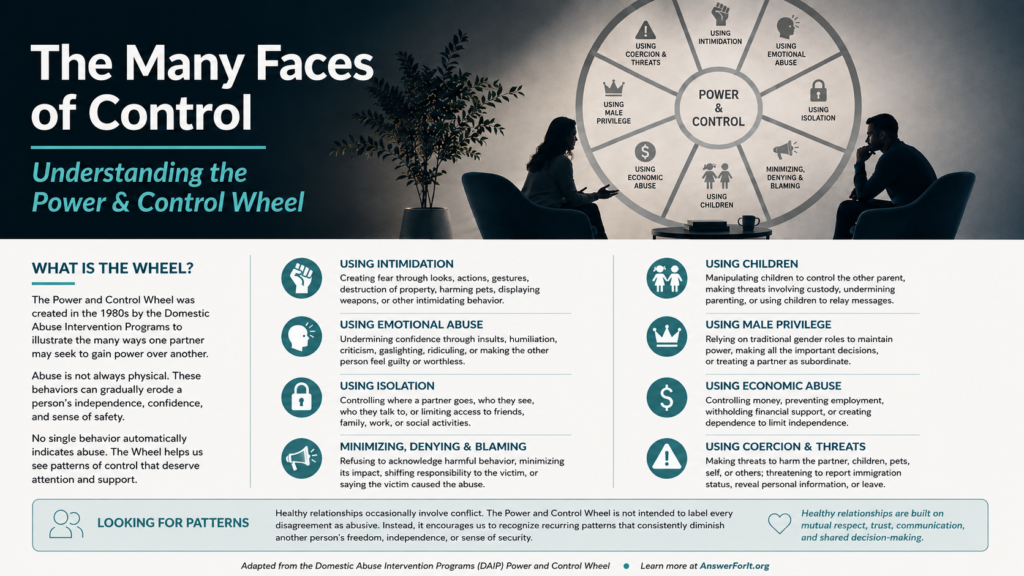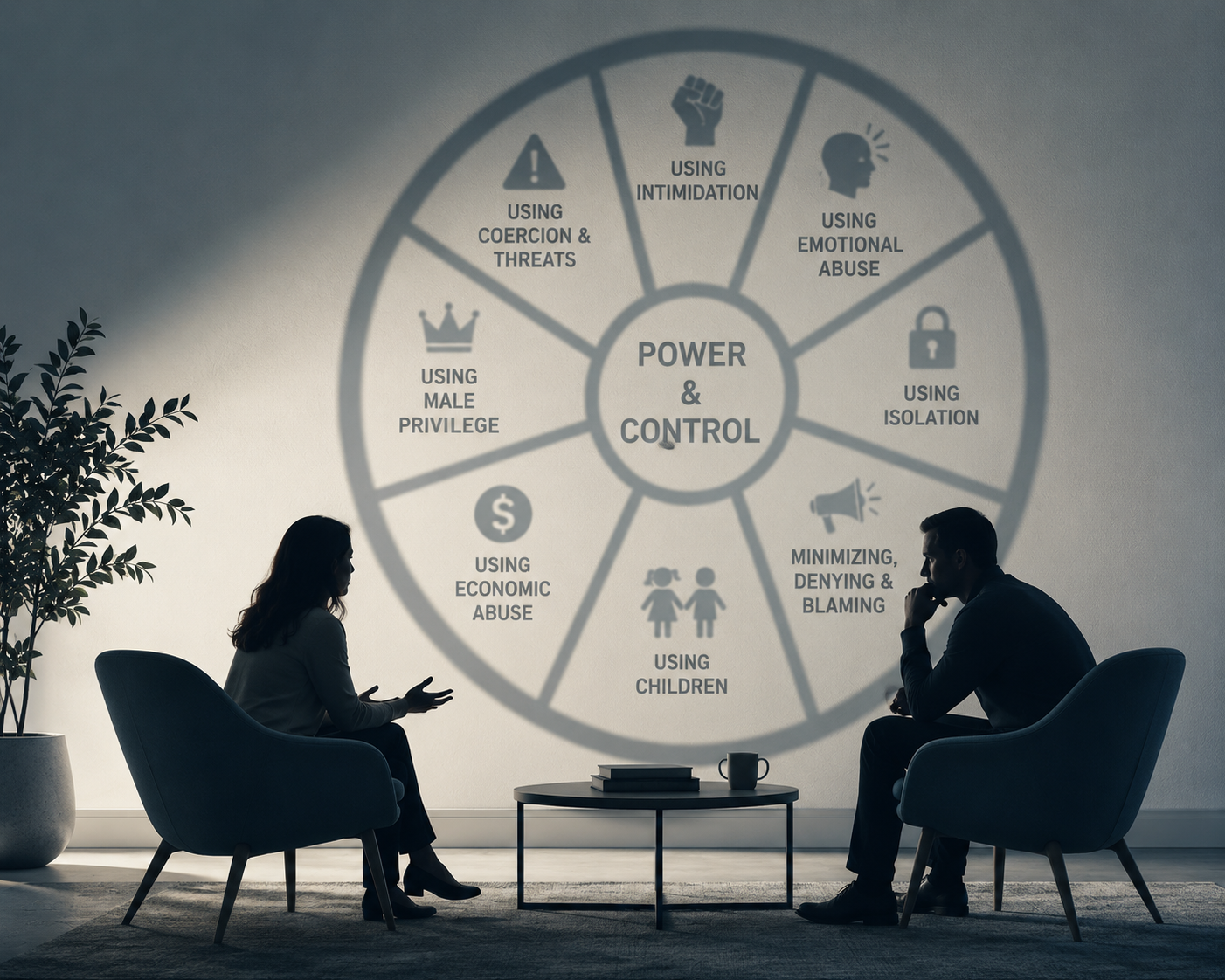

Using Intimidation
Creating fear through looks, actions, gestures, destruction of property, displaying weapons, harming pets, or other threatening behavior.

Using Emotional Abuse
Undermining a partner through insults, humiliation, criticism, name-calling, gaslighting, or making them feel guilty or worthless.
Using Isolation
Controlling where a partner goes, who they see, who they talk to, what they read, or limiting access to friends, family, work, or social activities.

Minimizing, Denying, and Blaming
Refusing to acknowledge harmful behavior, minimizing its impact, shifting responsibility to the victim, or claiming the victim caused the abuse.
Using Children
Manipulating children to control the other parent, making threats involving custody, undermining parenting, or using children to relay messages.

Using Male Privilege
Reflecting traditional gender-based power dynamics, such as acting as the sole decision-maker, treating a partner as subordinate, or expecting rigid gender roles.

Using Economic Abuse
Controlling finances, preventing employment, withholding money, creating financial dependence, or interfering with a partner's ability to become financially independent.

Using Coercion and Threats
Making threats to harm the partner, children, pets, or oneself; threatening to leave, report immigration status, reveal personal information, or otherwise force compliance through fear.