Why Name-Calling Matters in Domestic Violence
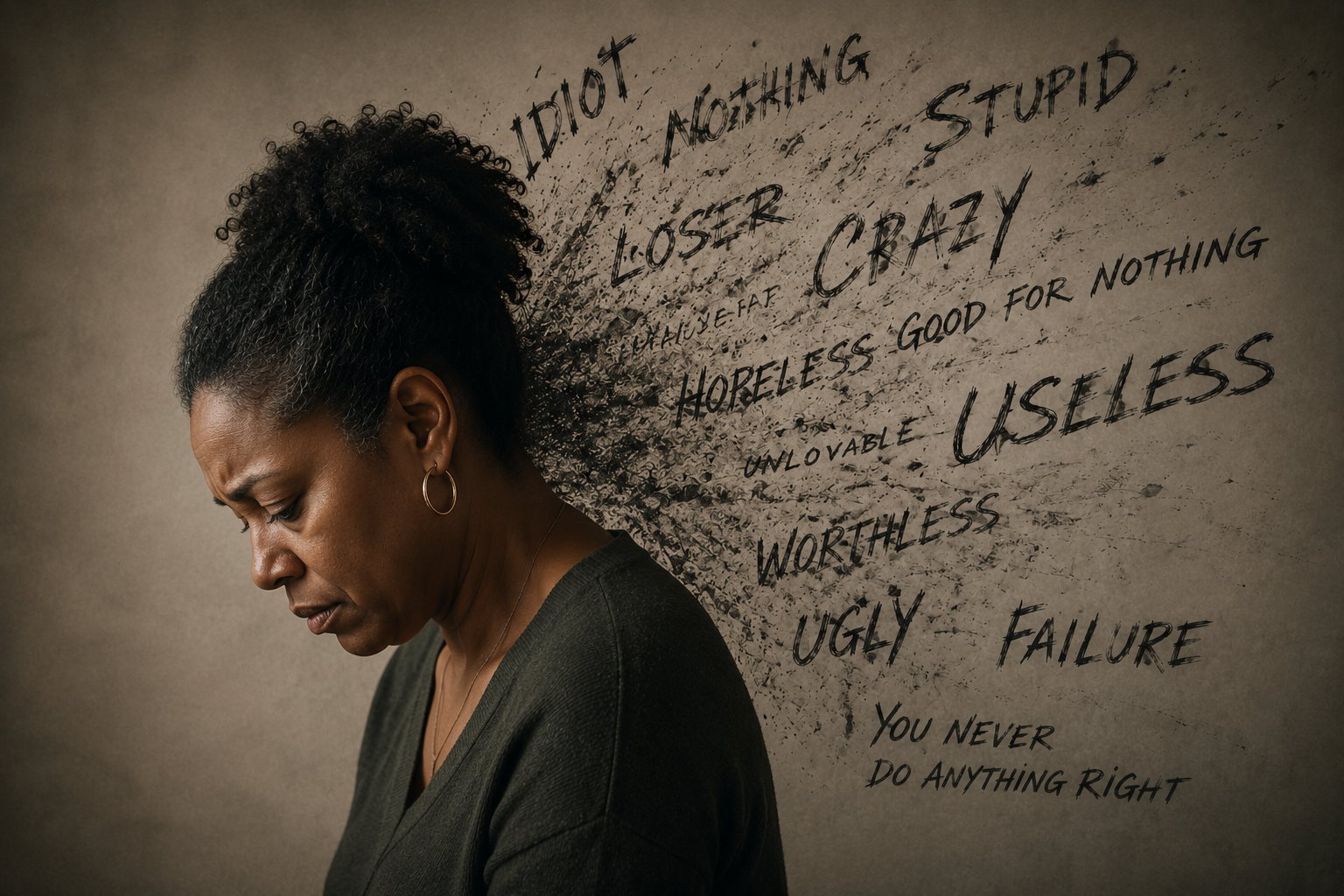
"Sticks and stones may break my bones, but names will never hurt me."
It's a saying many of us learned as children. But whoever coined that phrase probably wasn't thinking about domestic violence. In abusive relationships, words can become weapons. A bruise may eventually heal, but years of being called "stupid," "crazy," "worthless," or worse can fundamentally change how a person sees themselves. When those messages are repeated often enough, victims may begin to believe them.
That is one reason the Power and Control Wheel places such emphasis on emotional abuse.
More Than an Argument
Not every insult is domestic violence. Couples sometimes say hurtful things in the heat of an argument and later apologize. That is unhealthy, but it is not necessarily what the Power and Control Wheel is describing.
The wheel focuses on patterns of behavior that establish and maintain power and control. Within that context, chronic name-calling serves a purpose. It is not merely an expression of anger. It becomes a way of diminishing another person until they question their own judgment, abilities, and worth.
The message becomes relentless:
→"You're not a good parent."
→ "You can't do anything right."
→"You're lucky I put up with you."
→ "You'd never make it without me."
Over time, the goal is no longer simply to win an argument. It is to convince the other person that they are fundamentally inferior.
The Language of Superiority
One way to understand chronic name-calling is to ask what message it communicates. Repeated insults often convey more than frustration. They establish a hierarchy. The underlying message becomes:
"I know better." "My judgment matters more than yours." "I get to define who you are."
The abuse is not simply about making another person feel bad. It is about making them believe they are incapable of functioning without the person who is degrading them. Ironically, the abuser's greatest success is often not convincing the victim that he is exceptional. It is convincing the victim that she is inadequate.
A Name Carries Dignity
In How to Win Friends and Influence People, Dale Carnegie observed that a person's name is, to them, one of the most important words in any language. His advice was simple: use people's names because doing so conveys recognition and respect.
That observation takes on a different meaning in abusive relationships. Spend enough time reviewing domestic violence police reports, and another pattern often emerges. Rather than referring to their partners by name, some alleged offenders repeatedly use degrading labels and profanity instead.
The language itself is revealing. A person's name recognizes their individuality and humanity. Replacing it with degrading labels strips away dignity and reduces them to an object of contempt.
Facilitators of some batterer intervention programs have observed similar resistance. In certain group settings, participants have reportedly refused to complete exercises simply because they were asked to refer to their partners by their given names. For some individuals, even that basic acknowledgment of respect proved difficult.

"I Thought I Needed Him"
One woman's story illustrates how emotional abuse can distort reality. She was the primary wage earner. She supported the household financially. She cared for six children. She managed the day-to-day responsibilities of family life.
Yet according to her partner, she couldn't do anything right.
- She didn't discipline the children properly.
- She wasn't a good cook.
- She couldn't wash dishes correctly.
- She even drove to the grocery store the wrong way and took too long getting there.
No matter what she accomplished, it was never enough. Years of criticism slowly reshaped how she saw herself. She came to believe she needed her partner's judgment simply to survive. Then he went to jail.
Eight months later, she returned to a therapeutic group with a very different perspective. During those months, she continued earning the family's income. She paid the bills. She raised six children. She kept the household running—responsibilities she had largely carried even while he was living in the home. Then she quietly said something that changed the entire discussion.
"I'm doing just fine—actually, I'm doing even better. I don't need him in the house."
As she reflected on the previous decade, another realization emerged. She had spent years believing she depended on him. Yet she found herself wondering what meaningful role he had actually played during those years. She had been carrying the family all along.
More than anything, she needed space—space away from the daily criticism, the second-guessing, and the constant reminders that she supposedly wasn't capable. Only then could she test those beliefs against reality. She didn't become competent when he left. She finally had the opportunity to recognize the strength and ability she had possessed all along.
Why Emotional Abuse Lasts
Many survivors describe the physical pain of abuse as temporary. Bruises fade. Broken bones heal. The emotional wounds often take longer.
Years of humiliation and degradation can become an internal voice that persists long after the relationship has ended. Victims may continue questioning their judgment, doubting their abilities, and wondering whether they are ever good enough—even after the person who planted those beliefs is gone. That is why emotional abuse occupies such a prominent place on the Power and Control Wheel.
The deepest injury is not always the insult itself. It is the gradual erosion of confidence that allows one person to dominate another. When survivors finally begin to challenge that false narrative, many discover something remarkable: They were never as weak as they had been told. They were far stronger than they had ever been allowed to believe.
- What is the difference between saying something hurtful during an argument and repeatedly using insults to control another person?
- Why do you think repeated criticism can gradually change the way someone views themselves?
- Have you ever heard someone dismiss verbal abuse by saying, "They're just words"? How would you respond after reading this article?
- Why might replacing a person's name with degrading labels affect the dynamics of a relationship?
- What role do respect and dignity play in healthy communication?
- Why do you think emotional abuse can continue affecting someone long after the relationship has ended?
- How can friends, family members, or professionals recognize patterns of emotional abuse before they escalate?
- What qualities should characterize communication in a healthy relationship, even during disagreement?