When Every Conflict Becomes Retaliation
What Tom and Jerry teaches us about revenge, escalation, and breaking the cycle.

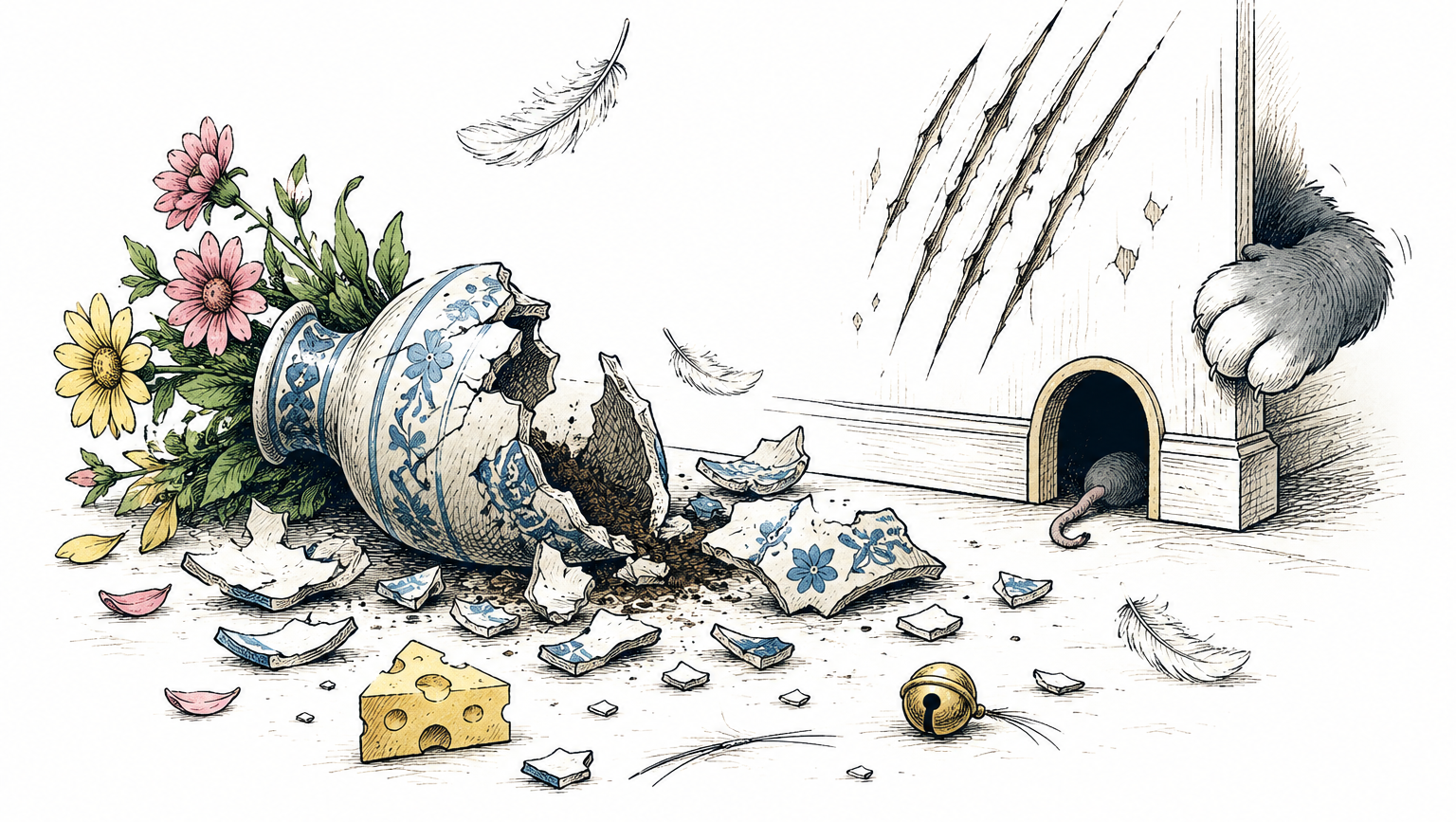
Tom and Jerry's rivalry is one of the most recognizable relationships in animation. Rarely does one character let a slight go unanswered. Every prank, insult, or injury is met with another act of retaliation, escalating into an endless cycle of chases, traps, and exaggerated violence.
Of course, the cartoons were intended as slapstick comedy, not relationship advice. The impossible stunts, dramatic explosions, and endless recoveries are part of what made the series entertaining for generations. Yet beneath the humor lies an interesting question: What happens when conflict is consistently portrayed as something to be won rather than resolved?
In the world of Tom and Jerry, almost every disagreement follows the same pattern. One character provokes the other. The other responds. That response becomes the justification for another act of revenge, which then justifies the next. Before long, neither character is responding to the original problem. They are reacting to the latest offense in an ever-growing chain of retaliation.
Real-life conflicts can unfold in much the same way.
An unkind comment leads to another. A sarcastic remark invites an even sharper response. Someone refuses to apologize because they believe the other person "started it." Over time, the original disagreement fades into the background while the conflict itself takes on a life of its own.
One of the challenges of retaliation is that it often feels fair. When someone hurts us, responding in kind can seem justified. Yet revenge rarely brings resolution. More often, it invites another response, another grievance, and another reason to continue the conflict.
Breaking that cycle usually requires something neither Tom nor Jerry is willing to do.
Someone has to pause.
Someone has to choose not to retaliate.
That doesn't mean accepting mistreatment or ignoring harmful behavior. Healthy relationships still require boundaries and accountability. But there is an important difference between addressing a problem and simply returning one injury for another.
Perhaps that's the lesson hidden beneath the comedy.
The strongest response isn't always the cleverest trap or the last laugh. Sometimes the greatest strength is refusing to let another person's behavior dictate your own.
Viewed through that lens, Tom and Jerry offers more than entertainment. It provides an opportunity to discuss how cycles of retaliation keep conflicts alive—and how choosing a different response can sometimes end a dispute that neither side remembers starting.

- Does getting even ever truly resolve a conflict?
- At what point does self-defense become retaliation?
- How can one person break a cycle of revenge without "losing"?
- What alternatives to retaliation are rarely portrayed in entertainment?
Character Reflections
Popeye
Might Makes Right?
Tom and Jerry
When Every Conflict Becomes Retaliation
The Incredible Hulk
Strength Without Control
Fred Flintstone
The Angry Husband Stereotype
Cinderella
When Kindness Meets Passivity
Lucy van Pelt
When Control Doesn't Require Force
Yosemite Sam
When Anger Becomes Authority