Might Makes Right?
What Popeye teaches us about strength, conflict, and winning.

For generations, audiences have watched Popeye solve problems in much the same way.
An insult. A rivalry. A disagreement over Olive Oyl.
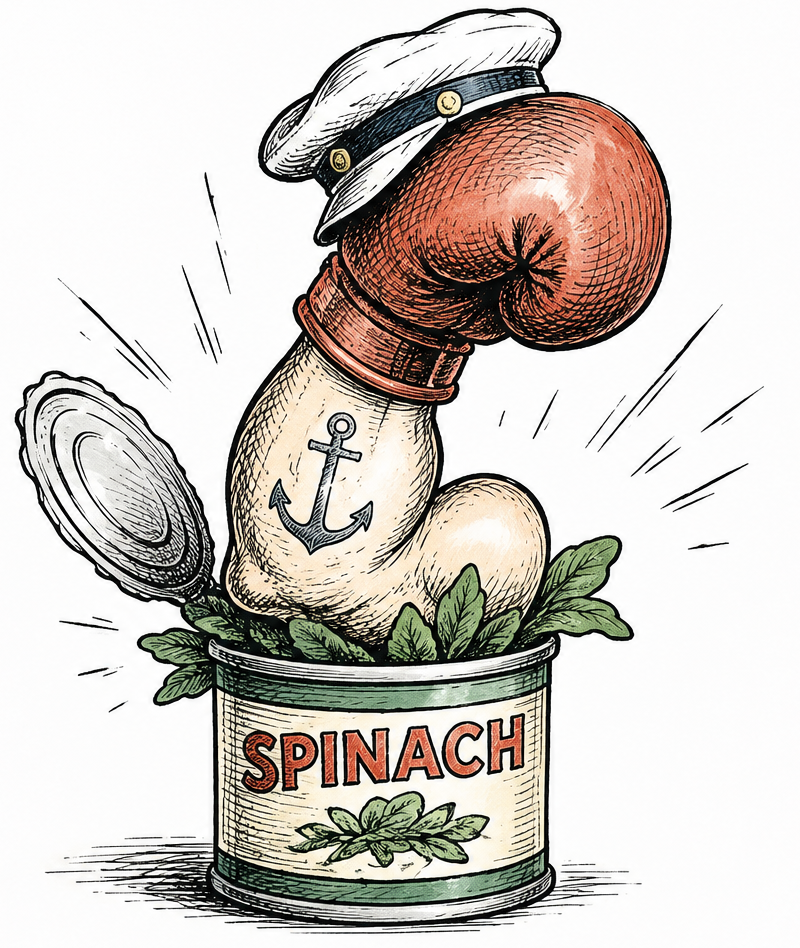
Then comes a can of spinach, bulging muscles, and a spectacular fight.
The villain is launched into the horizon, Popeye wins the day, and order is restored.
As entertainment, the formula is memorable and often humorous. As a cultural story, however, it raises an interesting question:
What message does it send when the strongest person is almost always the one who is "right"?
Many Popeye cartoons revolve around competition. Olive Oyl frequently becomes the object of that competition, while Popeye and Bluto battle to prove who is tougher, stronger, or more deserving of her affection. Rarely is the conflict resolved through conversation, compromise, or mutual understanding. Instead, the audience is invited to cheer as one man's physical dominance settles the dispute.
Of course, cartoons are intentionally exaggerated. Few children grow up believing that eating spinach provides superhuman strength. Yet stories often influence us in more subtle ways. When children repeatedly see disagreements ending with one person overpowering another, they may begin to associate strength with authority and victory with force rather than communication.
Popeye also reflects the era in which he was created. During much of the twentieth century, physical toughness was often celebrated as an essential part of masculinity. Heroes were expected to stand their ground, protect those they loved, and defeat their rivals. Emotional intelligence, empathy, negotiation, and vulnerability were rarely portrayed as heroic qualities.
Today's conversations about healthy relationships encourage us to broaden that definition of strength.
Real strength is not measured by the ability to overpower another person. It is often demonstrated by the ability to remain calm during conflict, communicate respectfully, exercise self-control, admit when we are wrong, and solve problems without intimidation or violence.
That does not make Popeye a "bad" role model.
In many ways, he reflects the values and storytelling traditions of his time. Like many classic cartoons, his adventures provide an opportunity to discuss how our understanding of strength has evolved—and how future generations might define it differently.
Perhaps the lesson isn't that Popeye was wrong.
Perhaps it's that today's heroes have more than one way to be strong.

- When you were growing up, what qualities made someone a hero?
- How often do movies, television shows, or cartoons resolve conflict through physical dominance rather than communication?
- Can physical strength and emotional maturity exist together? What might that look like?
- What qualities would you want children to admire most in the people they look up to?
- Have our cultural definitions of strength changed over time? If so, how?
- What does real strength look like in a healthy relationship?
Discussion Topics: Strength • Masculinity • Conflict Resolution • Emotional Intelligence • Competition • Media Influence • Healthy Relationships • Role Models
Character Reflections
Popeye
Might Makes Right?
Tom and Jerry
When Every Conflict Becomes Retaliation
The Incredible Hulk
Strength Without Control
Fred Flintstone
The Angry Husband Stereotype
Cinderella
When Kindness Meets Passivity
Lucy van Pelt
When Control Doesn't Require Force
Yosemite Sam
When Anger Becomes Authority