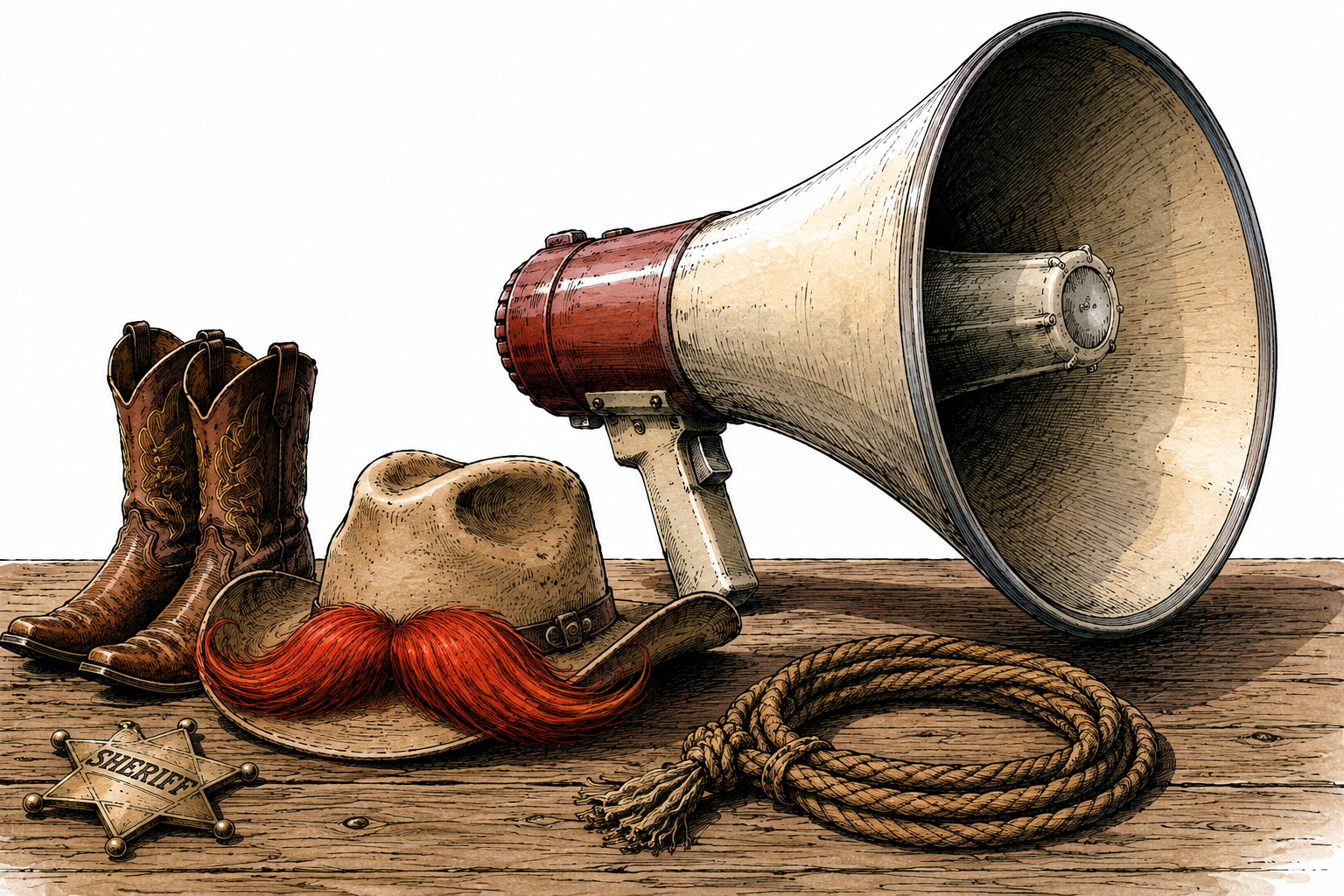
When Anger Becomes Authority
What Yosemite Sam teaches us about intimidation, power, and respect.

Some people earn influence through patience. Others rely on knowledge, experience, or quiet confidence.
Yosemite Sam chooses a different approach. He shouts.
Whether confronting Bugs Bunny, protecting his territory, or reacting to the smallest inconvenience, Sam's first response is almost always explosive. His booming voice, fiery temper, exaggerated threats, and quick draw define his character. The louder he becomes, the more convinced he seems that everyone around him should immediately fall into line.
The cartoons are, of course, intended to be funny. Sam's oversized personality is part of the comedy, and his elaborate attempts to impose his will usually backfire in spectacular fashion. Yet beneath the slapstick lies an interesting question about the way we perceive authority.
Does raising your voice make you more persuasive—or simply more intimidating?
In everyday life, people sometimes mistake volume for leadership. A forceful personality can dominate a conversation, causing others to become quiet—not because they agree, but because they want to avoid conflict. Compliance can easily be confused with respect, even though the two are very different. Healthy authority rarely needs to announce itself.
Parents, teachers, supervisors, coaches, and community leaders often need to make difficult decisions or establish firm boundaries. But effective leadership is not measured by how loudly someone speaks. It is measured by consistency, fairness, emotional self-control, and the ability to earn another person's trust. Someone who remains calm in the middle of disagreement often demonstrates far greater confidence than someone who immediately resorts to shouting or threats.
Yosemite Sam also reminds us that anger can become a habit. Throughout the cartoons, nearly every frustration is met with the same response: louder words, greater outrage, and increasingly dramatic attempts to regain control. The problem isn't simply that he becomes angry. It's that anger becomes his primary way of interacting with the world.
Many of us have encountered people who communicate in much the same way. Every disagreement feels like a battle. Every mistake becomes a crisis. Every challenge is answered with intimidation instead of curiosity, and every conversation becomes an opportunity to prove who is in charge.
Fortunately, real relationships offer something cartoons often do not. We have choices.
We can speak firmly without speaking harshly. We can establish boundaries without intimidation. We can disagree without humiliating another person. In many situations, the individual who exercises the greatest self-control demonstrates the greatest strength.
Perhaps the most enduring lesson of Yosemite Sam isn't about his temper.
It's about the difference between commanding attention and earning respect.
The two are not always the same.

- Have you ever mistaken a loud voice for genuine authority?
- Can someone be firm without being intimidating? What does that look like?
- Why do some people associate anger with strength?
- Have you ever remained silent simply because someone else's behavior felt overwhelming?
- What qualities make someone worthy of respect beyond confidence or volume?
- When does assertiveness become intimidation?
- How can leaders, parents, and partners exercise authority without relying on fear?
Discussion Topics: Intimidation • Authority • Emotional Regulation • Leadership • Respect • Conflict Resolution • Communication • Power Dynamics
Character Reflections
Popeye
Might Makes Right?
Tom and Jerry
When Every Conflict Becomes Retaliation
The Incredible Hulk
Strength Without Control
Fred Flintstone
The Angry Husband Stereotype
Cinderella
When Kindness Meets Passivity
Lucy van Pelt
When Control Doesn't Require Force
Yosemite Sam
When Anger Becomes Authority